Restore the homes we have. Help our neighbors. Strengthen Bartlesville.
Capitol Hill is Bartlesville’s historic downtown neighborhood, north of 11th Street between the Caney River and the railroad tracks.
Many of its homes are nearly 100 years old. They were built to last, but even a great old house eventually needs a new roof, HVAC system, plumbing, electrical work, foundation repairs, or other major improvements. And as construction costs have risen, those repairs have become harder and harder for families to afford.
At the same time, hundreds of homes and apartments in Capitol Hill are sitting empty, even while Bartlesville needs more housing. The research behind Rebuild Capitol Hill found that nearly one-third of the neighborhood's housing units are vacant.
I think this is an incredible opportunity.
We don't have to solve our entire housing shortage by building new houses from scratch. We can also take the homes we already have, help people take care of them, bring empty houses back to life, and create more opportunities for families to own a home.
That's the idea behind Rebuild Capitol Hill.
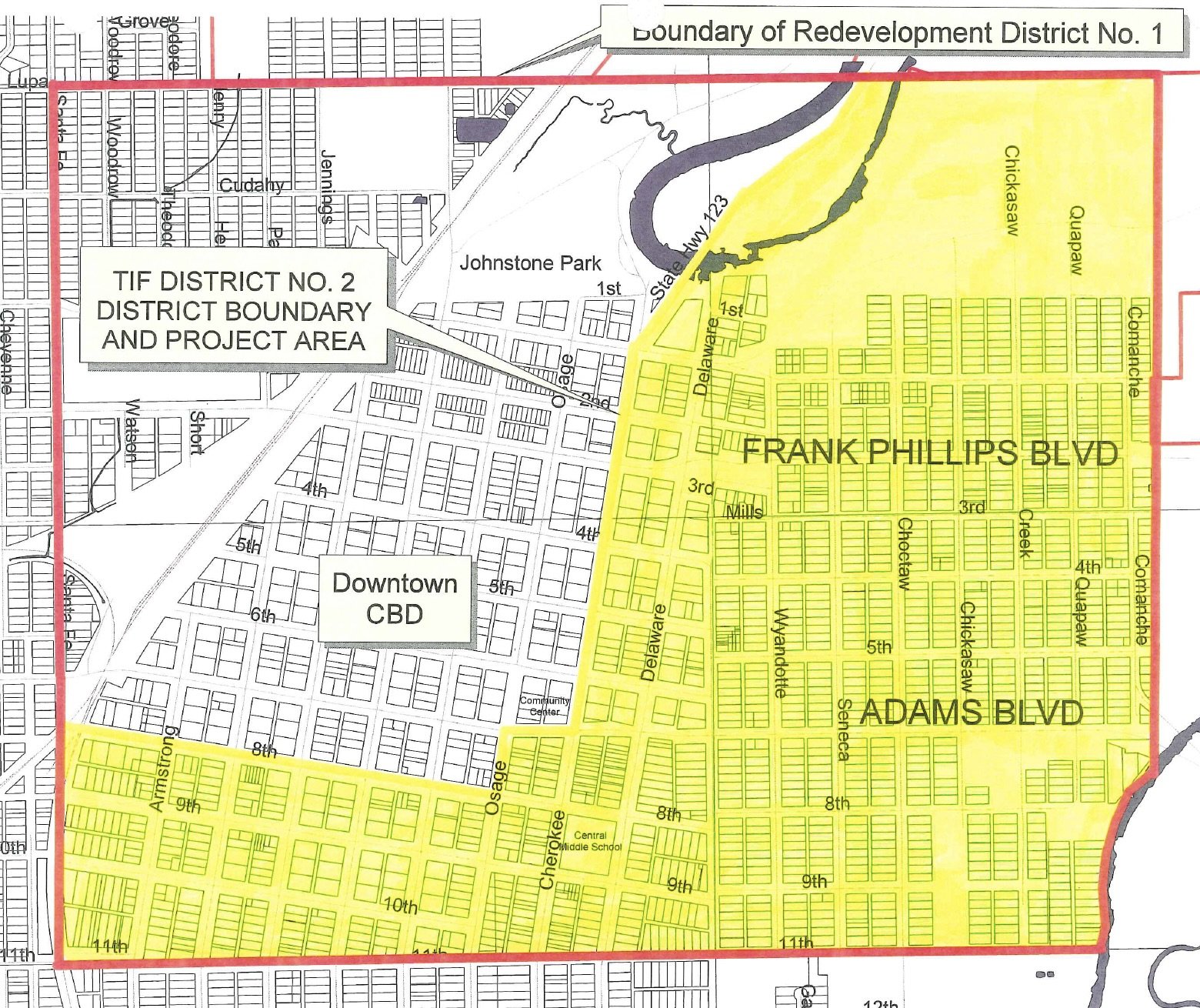
The Capitol Hill neighborhood is the yellow shaded area.
It includes about 1,400 housing units of all types, including single family, duplexes, triplexes, quadplexes, and multi-family units like apartments and condos.
Approximately 30% of those units are sitting vacant. That’s over 250 vacant units.
68% of occupied homes are rentals.
Nearly 60% were built before 1950.
About 2,300 people live here.
The median value of an owner-occupied home is about $110,000
Median rent is $931/month
We already have housing. The challenge is helping people afford to repair, buy, and restore them.
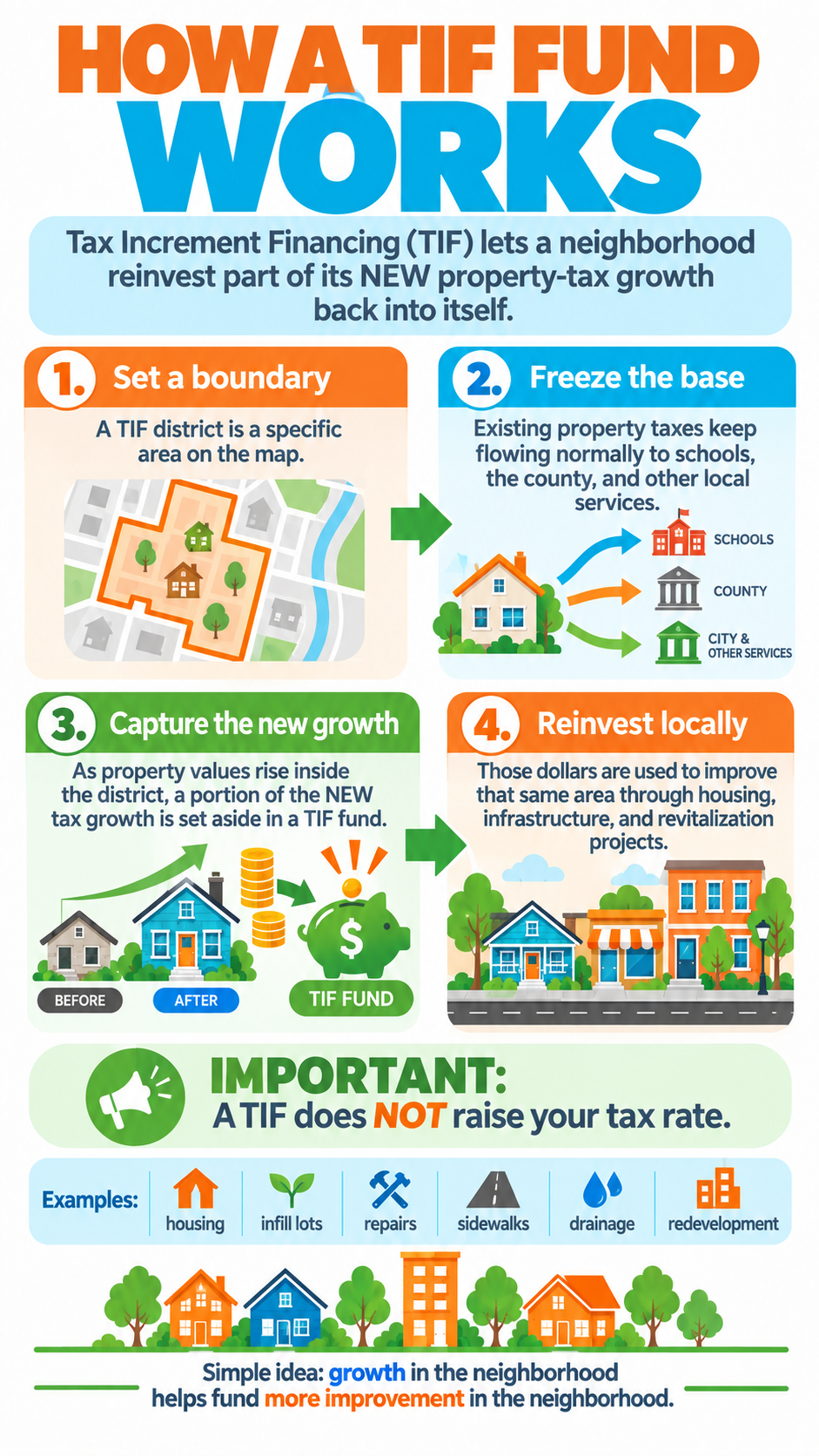
Where does the money come from?
More than 20 years ago, Bartlesville created the Capitol Hill TIF district to encourage redevelopment in the historic downtown neighborhood. As property values grew, a portion of the additional property-tax revenue generated inside Capitol Hill was set aside to be reinvested back into the same neighborhood it came from. The TIF has now expired, but over $2.5 million remains available for investment in Capitol Hill.
We expect these public dollars to help spark roughly $6–10 million in additional repairs and investment from homeowners, homebuyers, landlords, lenders, businesses, and other partners.
In other words, this is property-tax money generated by this neighborhood, originally intended to help redevelop this neighborhood. Rebuild Capitol Hill is about putting those dollars to work to turn some of Capitol Hill's biggest housing challenges into huge opportunities.
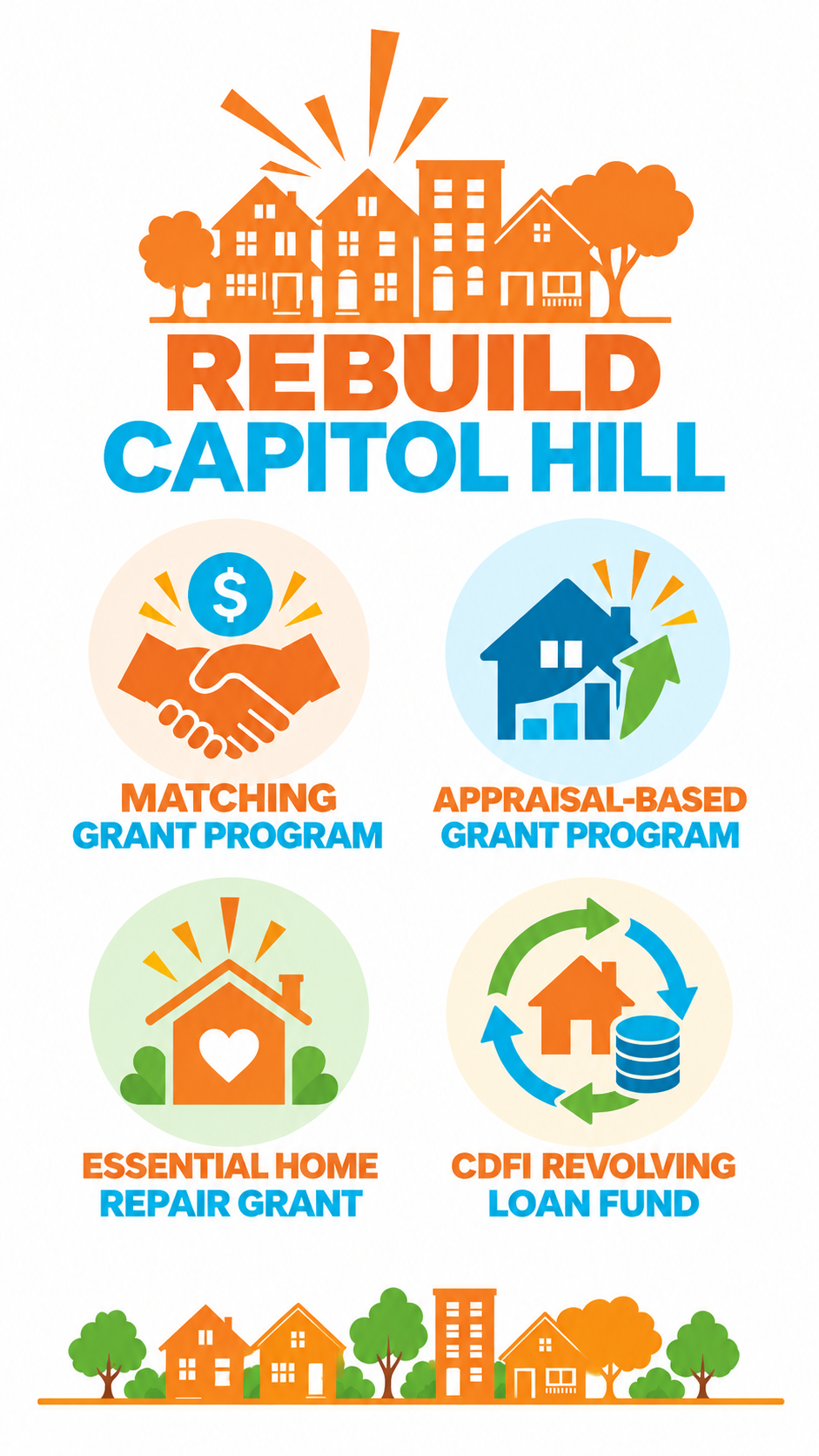
Rebuild Capitol Hill is a series of four financial assistance programs designed to encourage improving our Capitol Hill housing units. Each program solves a different problem and creates a different positive impact.
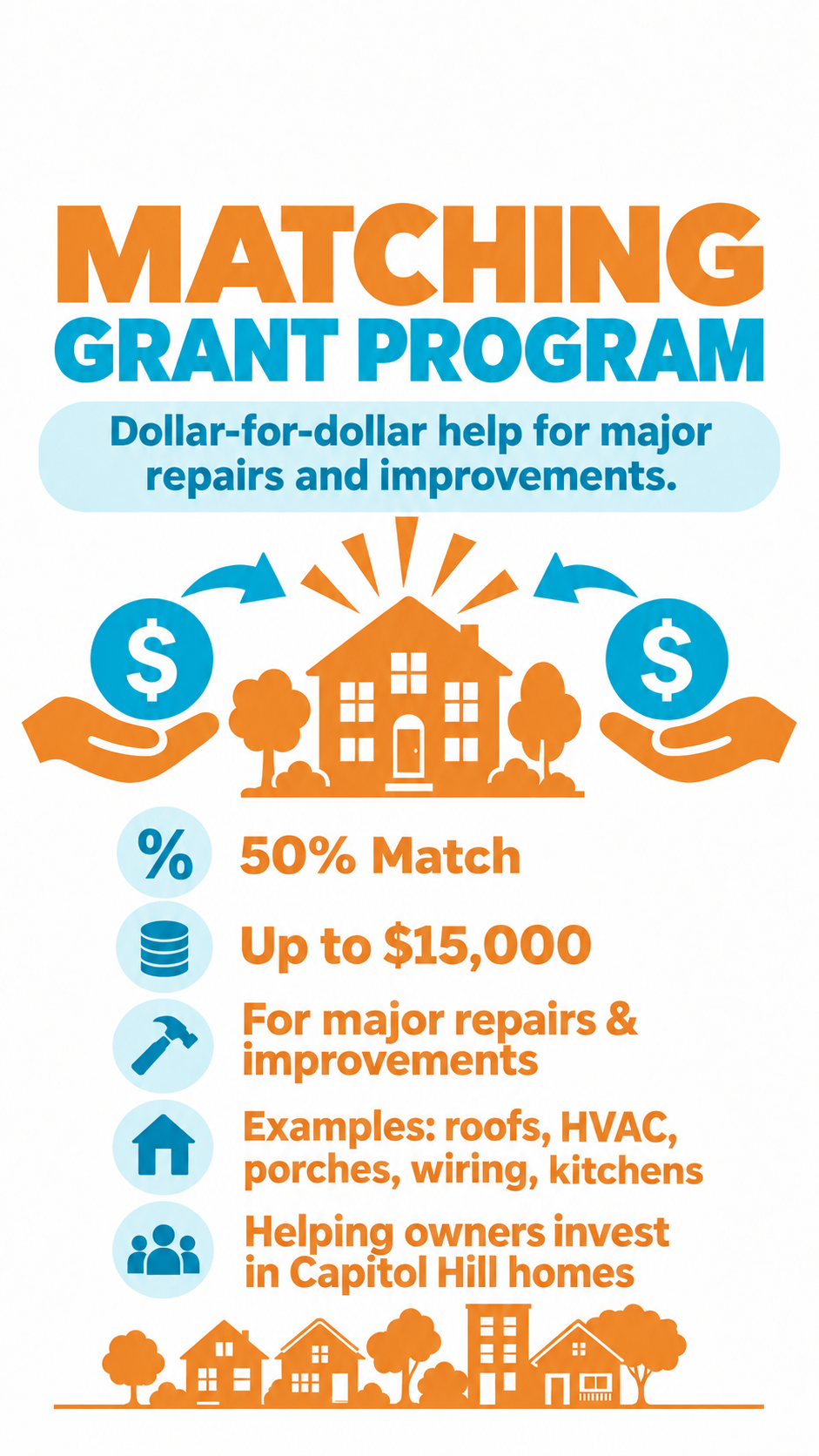
Matching Grant Program helps homeowners make repairs and improvements through a dollar for dollar match. The fund provides a 50% match for major repairs and improvements, up to $15,000. The focus is on things like roofs, HVAC, foundations, exterior work, and major renovations. Basically anything that is not simply a cosmetic upgrade. Both homeowners and landlords could qualify.
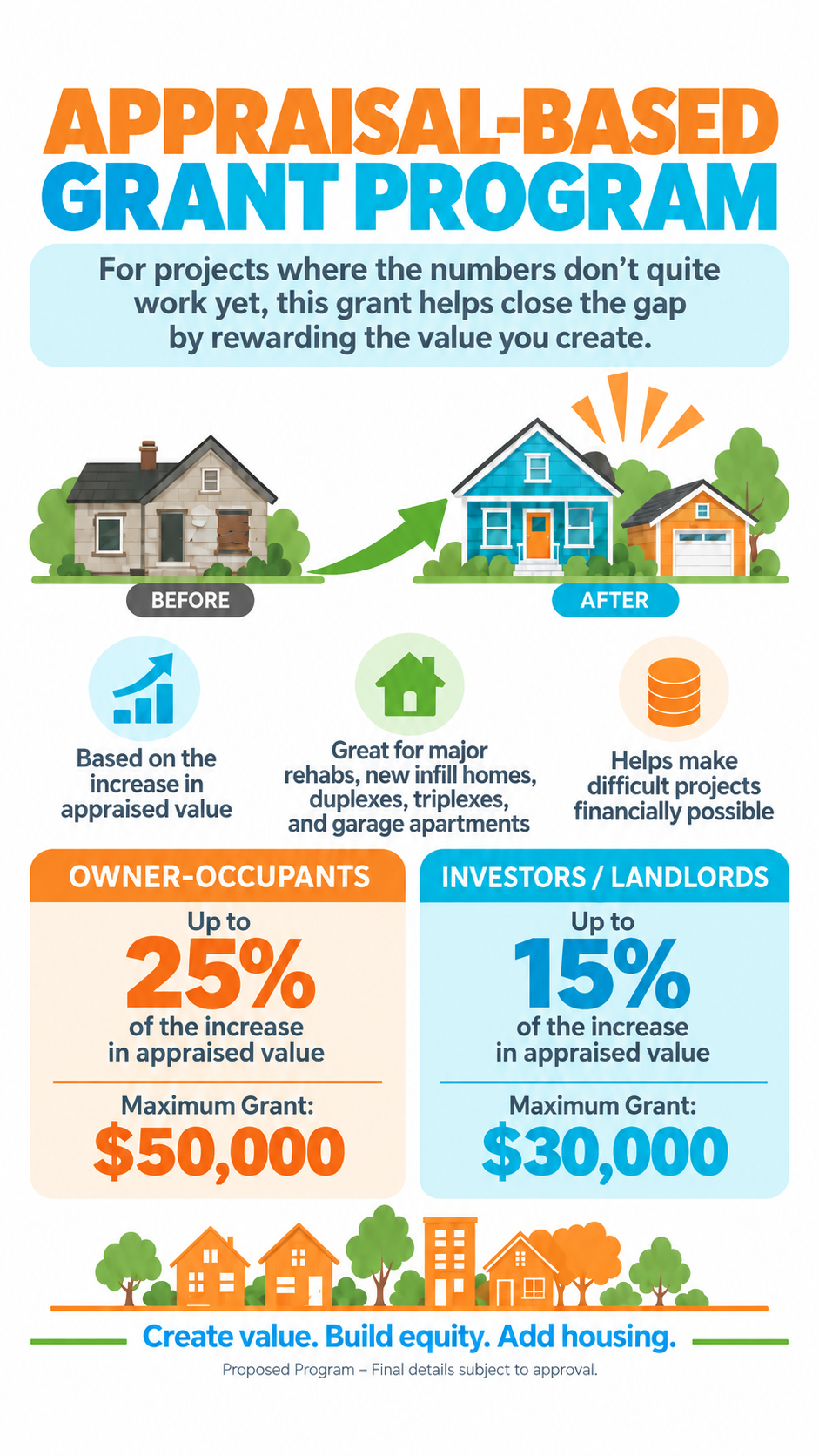
Appraisal-Based Grant Program: This would help make larger restorations possible by tying assistance to the amount of new property value created by the work. Owner-occupants would receive more generous assistance than investors, intentionally encouraging people to buy, restore, and live in Capitol Hill homes.
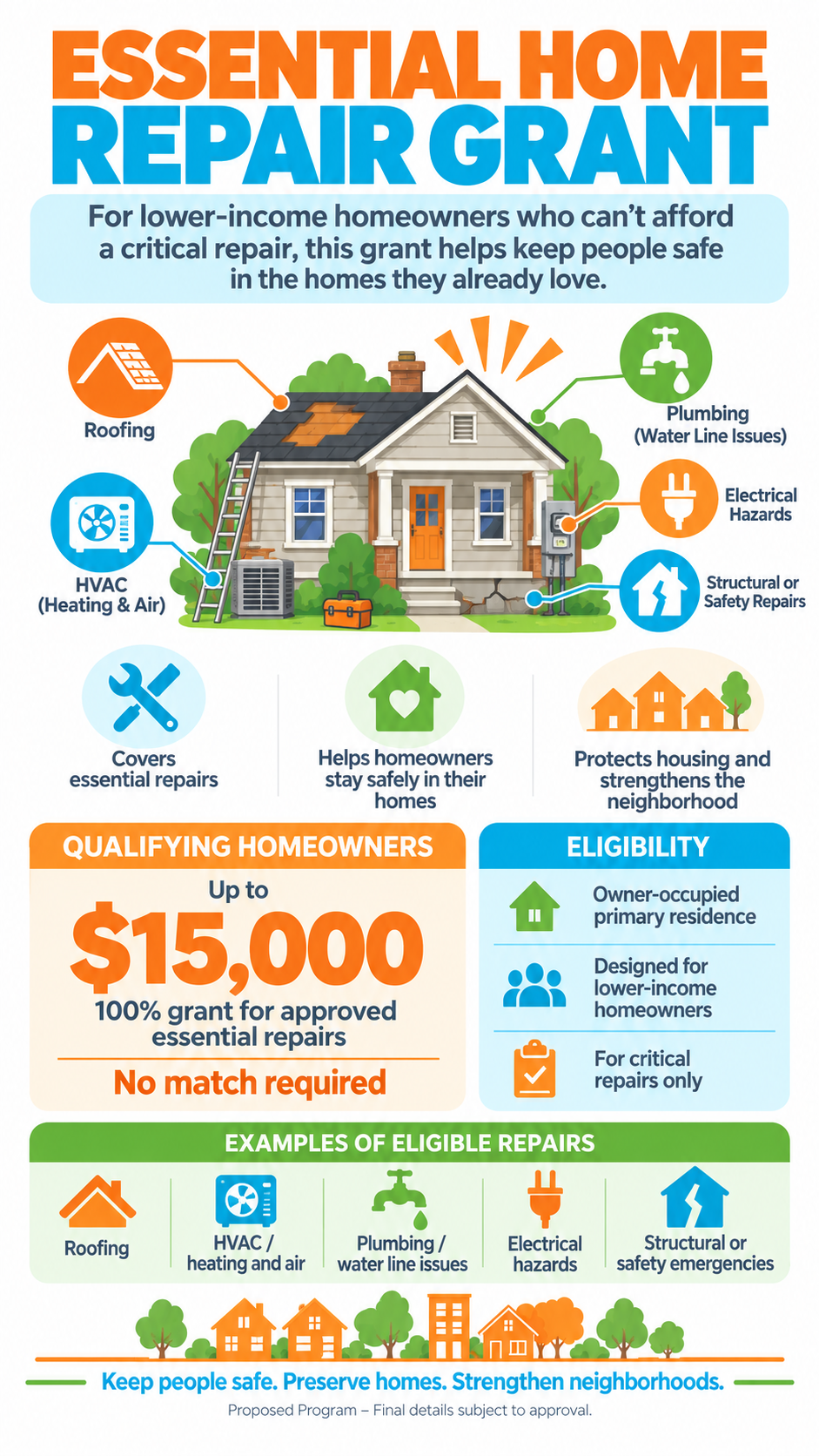
Essential Home Repair Grant: Lower-income homeowners facing a serious repair could receive up to $15,000 with no matching money required. This is designed for emergencies such as a failing roof, heater, water line, electrical problem, or other issue that could make the home unsafe or unlivable.
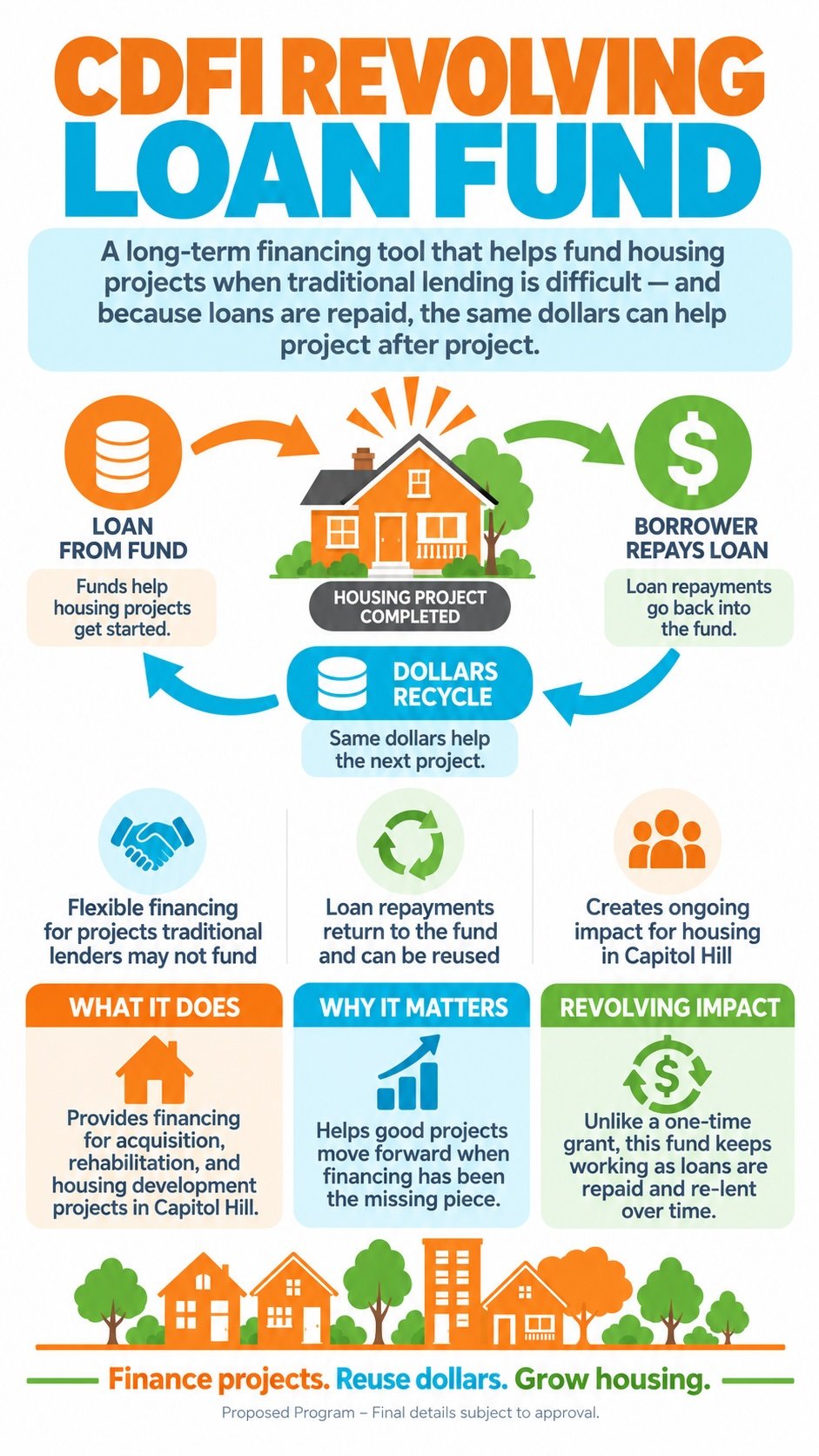
CDFI Revolving Loan Fund: This would create a long-term pool of flexible financing for buying and restoring Capitol Hill properties. Unlike a grant, the money would be repaid and then loaned out again, allowing the same dollars to keep helping new projects over time.
These are proposed programs we are actively developing, not programs that have been adopted yet. The final details will still need to go through the appropriate public review and approval process. Since the last election, I have been working with people throughout our community to bring this program to life, and I believe it will be an incredible win for our whole community.
Who will this help?
A longtime homeowner who needs a new roof
A senior on a fixed income facing an emergency repair
A renter who wants to buy the house they already live in
A young family trying to buy its first home
A landlord who wants to make major repairs and the people renting that repaired house
Someone willing to buy and restore an empty house
These programs also prioritize people who already live in Capitol Hill or who are buying a home there to live in themselves. Investors can play an important role in restoring vacant properties, but the goal is not simply to increase property values. It is to create a stronger neighborhood with more long-term residents and homeowners.
If we can bring vacant housing online, that will create more housing options, which has the ability to help lower rent costs across the community. By prioritizing owner-occupants for larger projects, we can help more people afford a home to own, which is a key hurdle for a growing number of people. And as the neighborhood improves, it will benefit everyone who lives, works, and plays in the downtown area of Bartlesville!
Capitol Hill is also just the beginning. My long-term vision is to build on the revitalization already happening downtown and keep that momentum moving west, restoring homes, strengthening neighborhoods, and encouraging new investment throughout Bartlesville’s west side.